
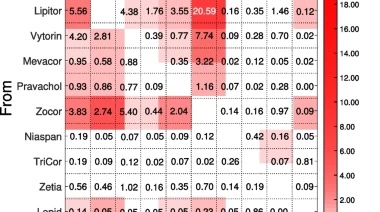
Shin, S., Liu, Q. (co-first author), Lu, S., and Nelson, P. (2026).Incorporating Switching Reasons into A Factor-Analytic Choice Model: A Study on Benefit Segmentation of Physicians, Quantitative Marketing and Economics, Vol 24, 4.
This study draws implications for targeting by incorporating switching reasons into a factor-analytic choice model for conducting benefit segmentation. In contrast to survey or conjoint-based studies, our segmentation task relies on a time series of brand choice decisions in real practice to improve external validity. Using physician-level panel data, we estimate a factor-analytic choice model to identify the primary product benefits each physician seeks. The key empirical challenge is that standard prescription data are entirely agnostic about the set of product benefits that underlie drug preferences. To address this issue, we utilize self-reported switching reasons in addition to the observed prescription choices. Accordingly, we extend the standard factor-analytic choice model to incorporate this augmented data and develop a Markov chain Monte Carlo (MCMC) procedure for estimation. Our proposed model enables us to directly identify which physicians are more efficacy, side effects, and/or cost saving oriented, an essential input to conducting benefit segmentation and fine-tuning subsequent targeted marketing promotion activities. We also investigate how misleading statistical inferences from standard factor-analytic choice models can be without the aid of augmented switching reasons data.
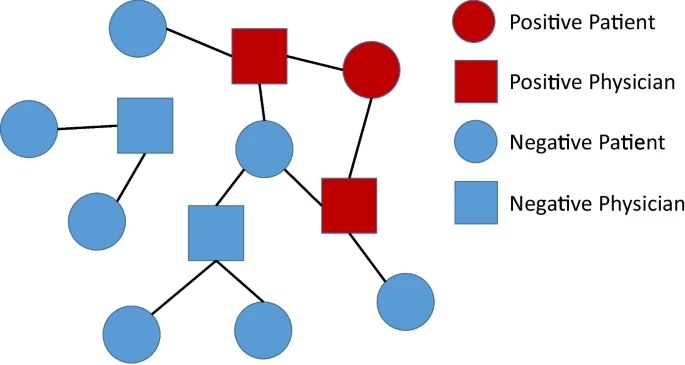
Cai, Y., Liu, Q., Wang, Y., Zhang, F. (Equal Contribution) (2025).Predicting rare events in markets with relational data, Quantitative Marketing and Economics, Vol 23, 544-588.
This study presents a modeling framework for predicting rare events in relational data settings. Focusing on the rare disease market, it introduces a factor graph model within a Bayesian classifier that jointly models physician and patient features through their complex visit relationships. The framework is applied to an empirical case focused on identifying physicians treating hereditary angioedema patients, using extensive prescription and medical claims data. Our analysis demonstrates the model’s effectiveness, showing it surpasses various benchmark models in identifying rare disease physicians, including those currently recognized in healthcare databases and those likely to emerge in the future. This research contributes to the existing literature by addressing the challenge of predicting rare disease physicians and highlighting the benefits of leveraging relational dependencies among distinct entities to forecast rare events.
 Qiang Liu 劉強